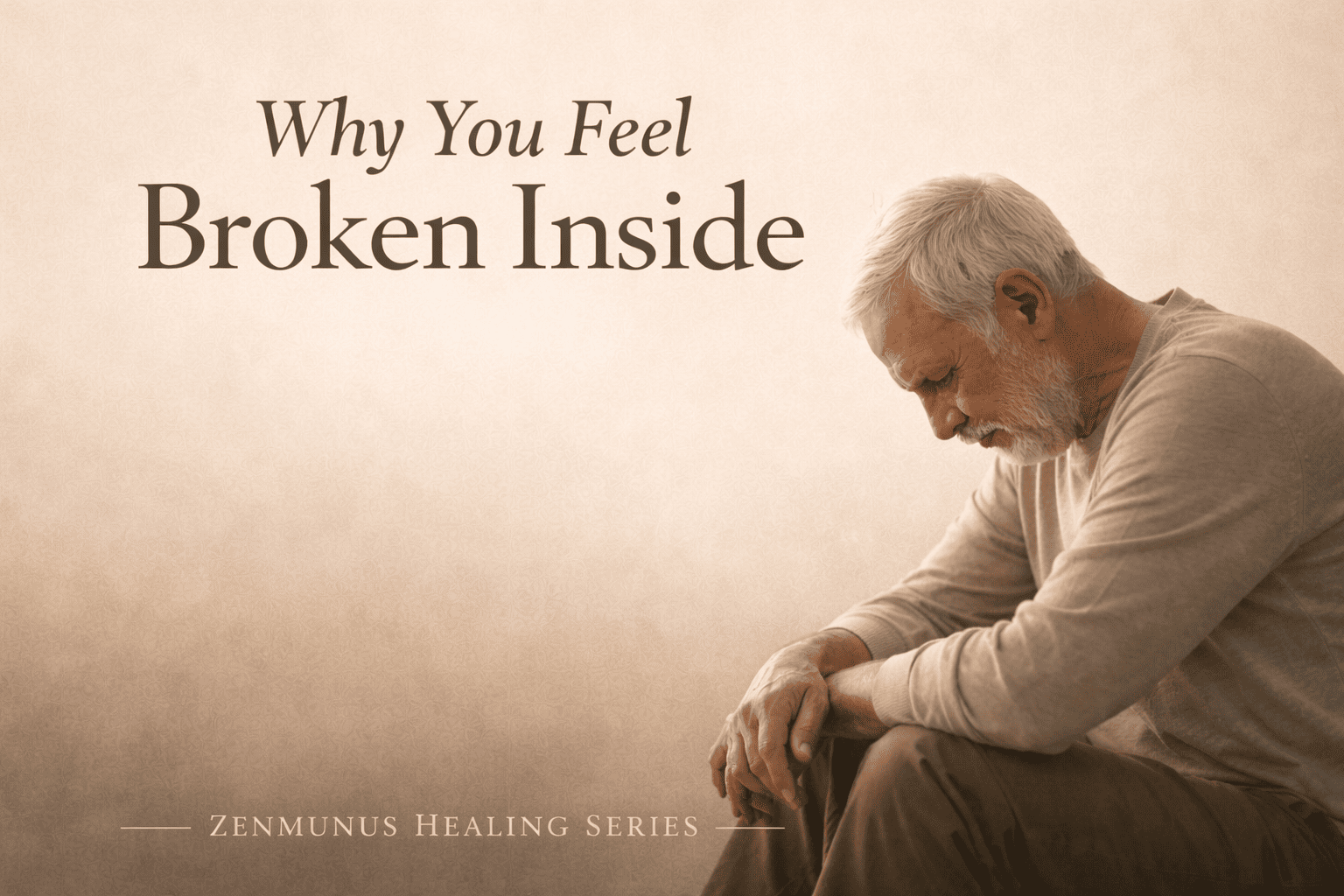
You look okay on the outside. You go through your day, talk to people, maybe even smile at the right moments. From a distance, nothing seems wrong. But inside, something feels off. There’s a quiet heaviness you can’t explain. You feel tired without a clear reason, disconnected without knowing why, and no matter what you do, that emptiness doesn’t fully go away. If this feels familiar, you’re not alone—and more importantly, there is a reason behind it.
What you’re feeling is not weakness. It’s not something “wrong” with you. It’s the result of things that have been building up quietly over time. Most people don’t notice it until it becomes too loud to ignore. One of the biggest causes is emotional overload. You’ve experienced things—stress, rejection, pressure, expectations—and instead of processing them, you’ve pushed them down just to keep going. That might have helped you survive in the moment, but over time, those unprocessed emotions don’t disappear. They stay within you and slowly start affecting how you feel, think, and respond to life.
Another major reason is overthinking. When your mind is constantly active, analyzing everything, replaying situations, and worrying about what could go wrong, it drains your mental energy. The problem is not thinking itself—it’s the lack of resolution. You think, but you don’t arrive at clarity. This creates a loop, and that loop creates exhaustion. Eventually, you start feeling stuck, even when nothing obvious is blocking you.
Then there’s something deeper: disconnection from yourself. You may have spent so much time adapting to others, meeting expectations, or just trying to “keep things together” that you’ve lost touch with what you truly feel and need. When that happens, even good things don’t feel fulfilling anymore. You can have a stable life and still feel empty inside, because the connection with your inner self is missing.
Here’s the truth most people won’t tell you: you can look perfectly fine and still be quietly struggling. And if this state continues without awareness, it doesn’t just stay the same—it grows. It can turn into anxiety, emotional numbness, or a constant sense of being lost. That’s why ignoring it doesn’t work.
You can, however, take the first step toward change right now. Start by creating space instead of escaping. Put aside distractions for a few minutes each day and sit with yourself without trying to fix anything. It may feel uncomfortable at first, but that discomfort is where awareness begins. Next, get your thoughts out of your head and onto paper. Write without filtering—your worries, your confusion, your emotions. This helps release mental pressure and brings clarity to what you’re actually feeling. Finally, allow yourself to feel without judging it. If you feel low, accept it instead of labeling it as weakness. If you feel lost, acknowledge it instead of hiding from it. Awareness is the first step of healing.
But it’s important to understand something. These steps can help you feel better temporarily, but they are not a complete solution. You might feel a shift for a few days and then find yourself slipping back into the same patterns. That’s because real healing doesn’t happen randomly—it requires a clear, structured approach.
This is exactly why I created The Art of Deep Healing. It’s not a motivational read filled with temporary inspiration. It’s a step-by-step system designed to help you understand your inner state, release emotional weight, and rebuild your connection with yourself in a practical and sustainable way. Inside, you’ll learn how to process emotional pain instead of suppressing it, how to break the cycle of overthinking, how to reconnect with your inner clarity, and how to build a sense of calm that doesn’t depend on external situations.
At this point, you have two choices. You can continue as you are—managing the feeling, distracting yourself, and hoping it fades on its own. Or you can decide that you’re ready to understand what’s really happening inside you and take a structured path toward change. If you’re serious about feeling different—not just temporarily, but deeply—then it’s time to go beyond surface-level fixes.
Start your healing journey with The Art of Deep Healing and give yourself the clarity, stability, and inner peace you’ve been looking for. This isn’t about becoming someone new. It’s about returning to a version of yourself that feels whole again.
FAQs
Is this feeling normal? Yes, many people experience this, especially in today’s fast-paced world, but normal doesn’t mean it should be ignored.
Can I heal without therapy? Yes, if you follow a structured and consistent approach to understanding and processing your inner state.
How long does it take to feel better? Some changes can be felt within days, but deeper transformation depends on consistency and the method you follow.
Is this book suitable for beginners? Yes, it’s designed to be simple, practical, and easy to follow even if you’re just starting your healing journey.